


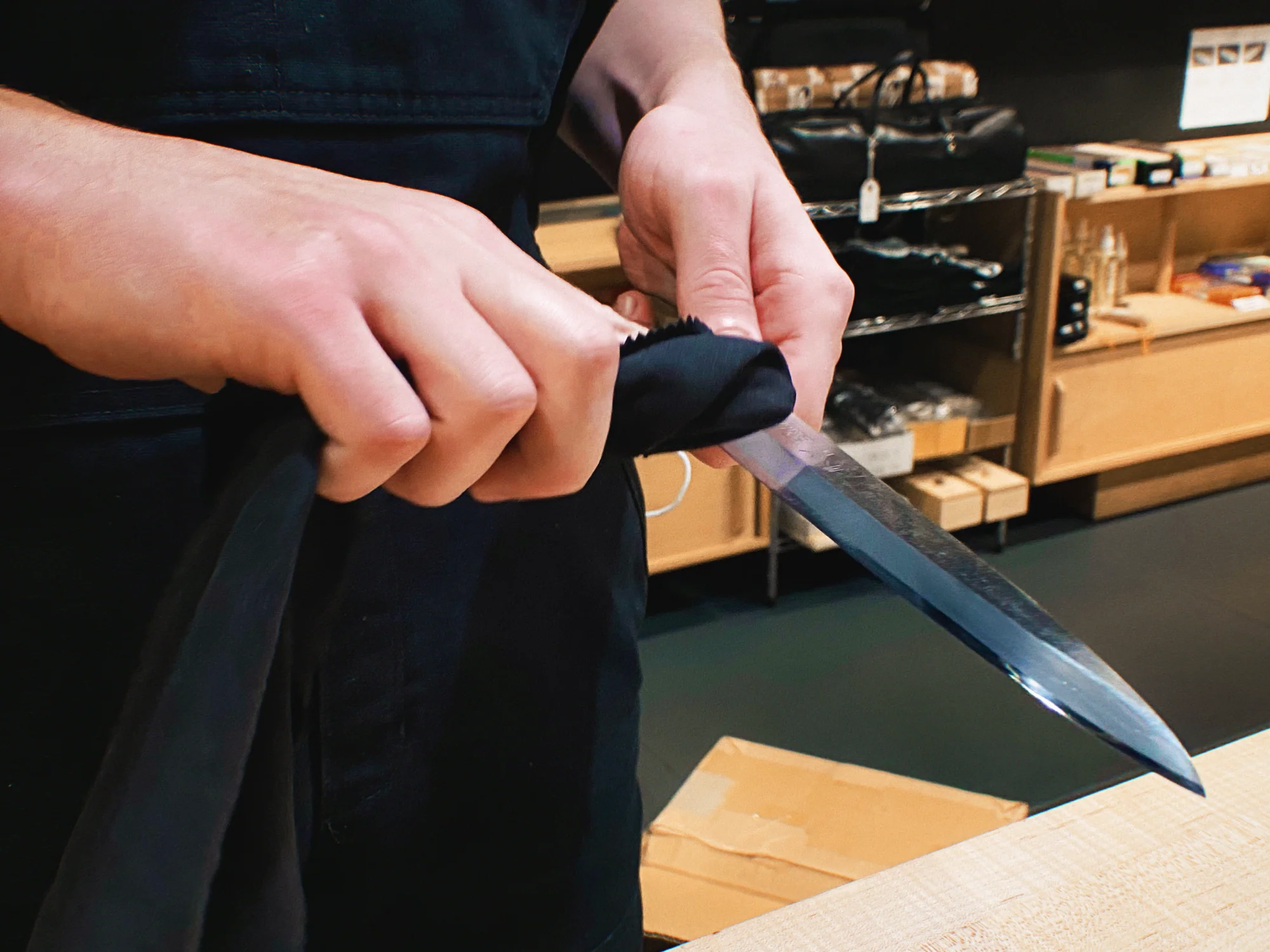

Avoid cutting hard items
When cutting, avoid hard items like frozen food, ice, or bones that can damage your knife's delicate edge. Japanese knives are crafted with harder steel that excels at precision cuts but requires careful handling with tough ingredients. Take extra caution when slicing dense vegetables like winter squash or pumpkin—these should be approached with proper technique and careful attention to prevent chipping of the blade's edge or tip.
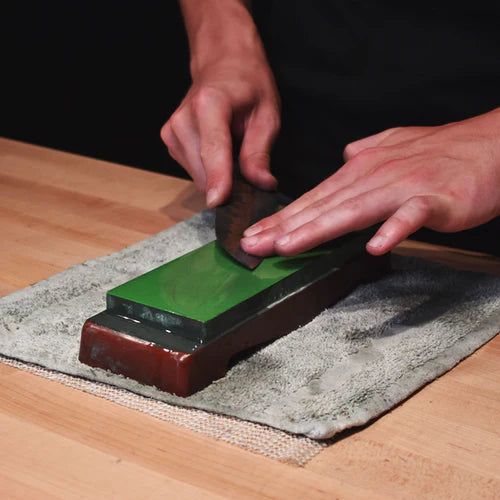
Sharpen with whetstones
Standard sharpening tools made for European steel aren't suitable for Japanese knives. For Japanese steel, we strongly recommend using a whetstone instead of a honing rod or pull-through sharpener. If you're not familiar with whetstone sharpening, we suggesthaving your knife sharpened by a qualified expert. To learn the basics yourself, considerwatching our tutorial video seriesorjoining one of our knife sharpening classes.

Hand wash only
Don't use the dishwasher—harsh detergents and high heat will damage your knife. Instead, hand wash with mild soap and warm water, carefully cleaning both sides and the edge. Dry completely with a soft cloth to prevent rust. This proper care routine maintains your knife's performance and lifespan.

Keep carbon steel dry
When using a high-carbon blade, wipe it frequently—especially after cutting acidic foods. Always wash and dry immediately after use, then store the knife completely dry with its edge protected in a dry place.

Apply oil to carbon steel
For carbon steel knives, it is essential to apply a protective layer of camellia oil after each use or before storing the knife for an extended period. This traditional blade oil creates a barrier that effectively shields the reactive carbon steel from moisture and oxidation, preventing the formation of rust. The oil should be applied carefully using a soft cloth, ensuring complete coverage of the blade.

Cut on a proper surface
Use a cutting board made of soft materials like wood or plastic. Hard surfaces such as granite, ceramic, or bamboo will dull the blade's edge and increase the risk of damage.

Use knife safely
Handle your knife with care and focus to prevent injury. While cutting, keep your fingers away from the blade's edge, maintain a firm grip on the knife, and stay attentive. When passing a knife to someone else, always present it handle-first. Store your knives safely in a knife block, magnetic strip, or blade guard when not in use.
Thank you for reading.
Following these care guidelines will help maintain your knife's exceptional performance and extend its lifespan. Remember that proper maintenance is an investment in your knife's future - a well-cared-for knife will serve you faithfully for generations.
Have questions about knife care? Need personalized advice? Our knife care experts are here to help. Contact us at info@seisukeknife.com or visit us in-store for hands-on assistance.